Client
Federal Republic of Germany represented by Autobahn GmbH in turn represented by DEGES Deutsche Einheit Fernstraßen-planungs- und-bau GmbH
Location
Lederhose, Germany
A9 Motorway
The A9 in Thuringia is Germany's first motorway PPP delivered on an availability-payment basis - removing traffic risk from the private partner and aligning incentives around long-term road performance. Invesis and VINCI Concessions won the contract in 2011 to widen 19km and maintain 46.5km of motorway, completing construction on time in November 2014.
Financial Close
September 2011
Construction Period
2011 - 2014
Concession Period
20 years
Handback
2031
Client
Federal Republic of Germany represented by Autobahn GmbH in turn represented by DEGES Deutsche Einheit Fernstraßen-planungs- und-bau GmbH
Location
Lederhose, Germany
Sponsor/Investor
Invesis and VINCI Concessions
Consortium
Via Gateway Thüringen GmbH @ Co KG (Invesis and VINCI Concessions)
Engineering Procurement and Construction
Wayss & Freytag Ingenieurbau, Eurovia
Operations and Maintenance
Via Gateway Thüringen GmbH @ Co KG
Capital Value
€131m
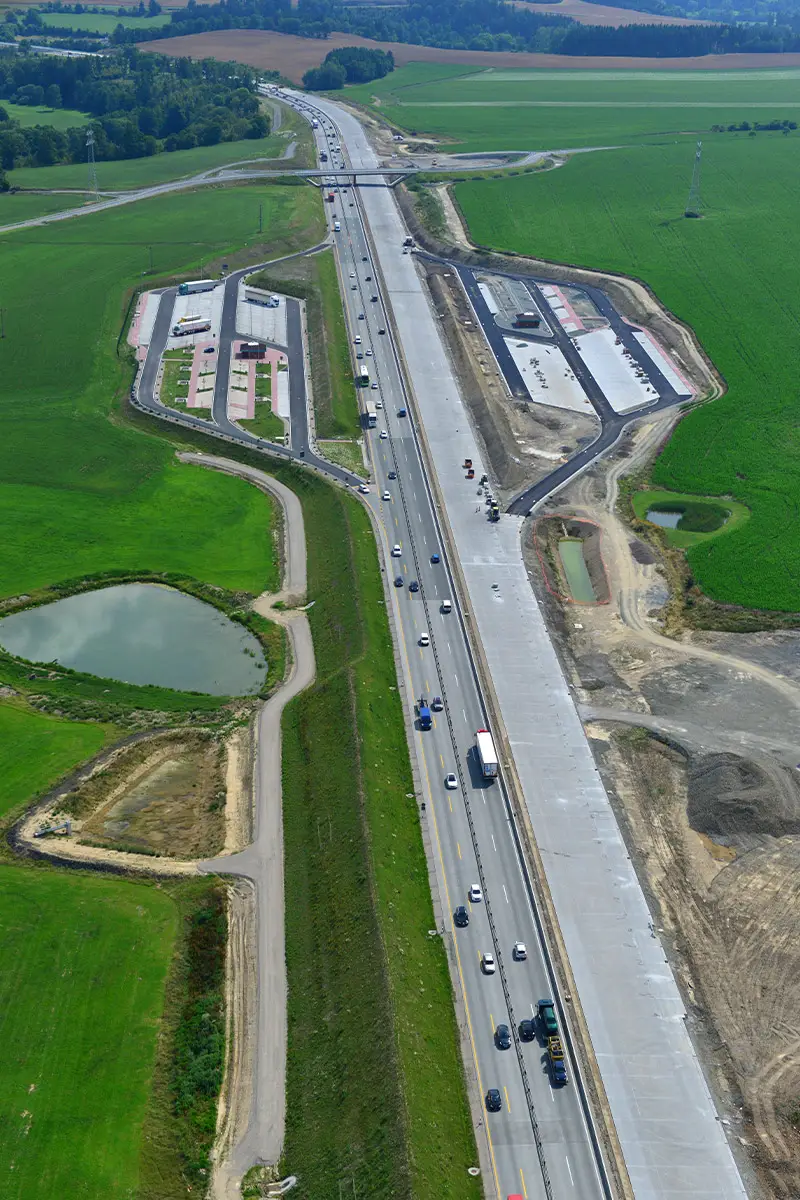
Partnering with the German Federal Government to widen and modernise a congested motorway corridor in Thuringia
The A9 corridor in Thuringia had been under increasing pressure from heavy traffic volumes, with accident rates on the existing two-lane section a major concern for the Federal Ministry of Transport.
In 2011, the Federal Republic of Germany selected the Via Gateway Thuringen consortium - comprising Invesis (50%) and VINCI Concessions (50%) - under a 20-year DBFMO contract. The scope covered the widening of 19km from 2x2 to 2x3 lanes, construction of 24 new bridges and operation and maintenance of a total 46.5km corridor. Construction was completed on time in November 2014.
The A9 was Germany's first motorway PPP delivered under an availability-payment model - a significant milestone removing traffic volume risk from the private partner and aligning long-term commercial incentives with road quality and availability.
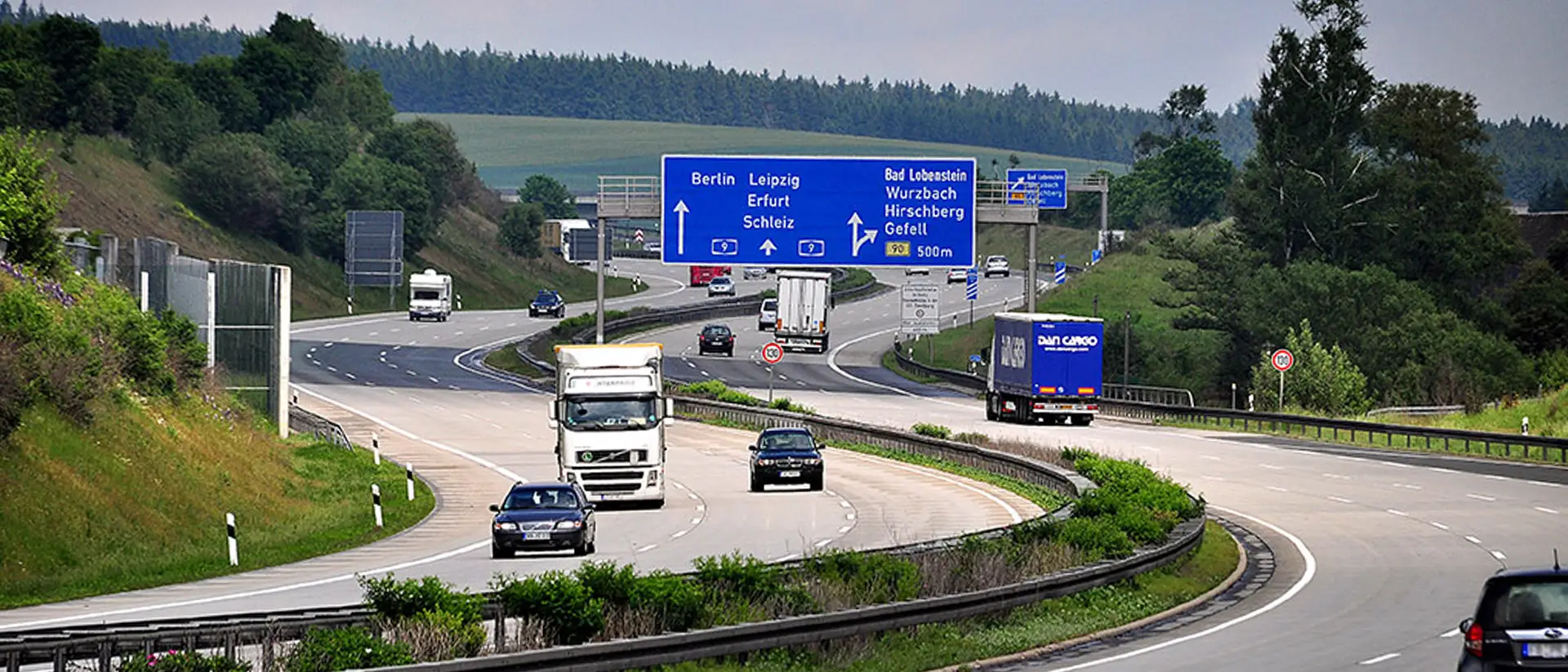

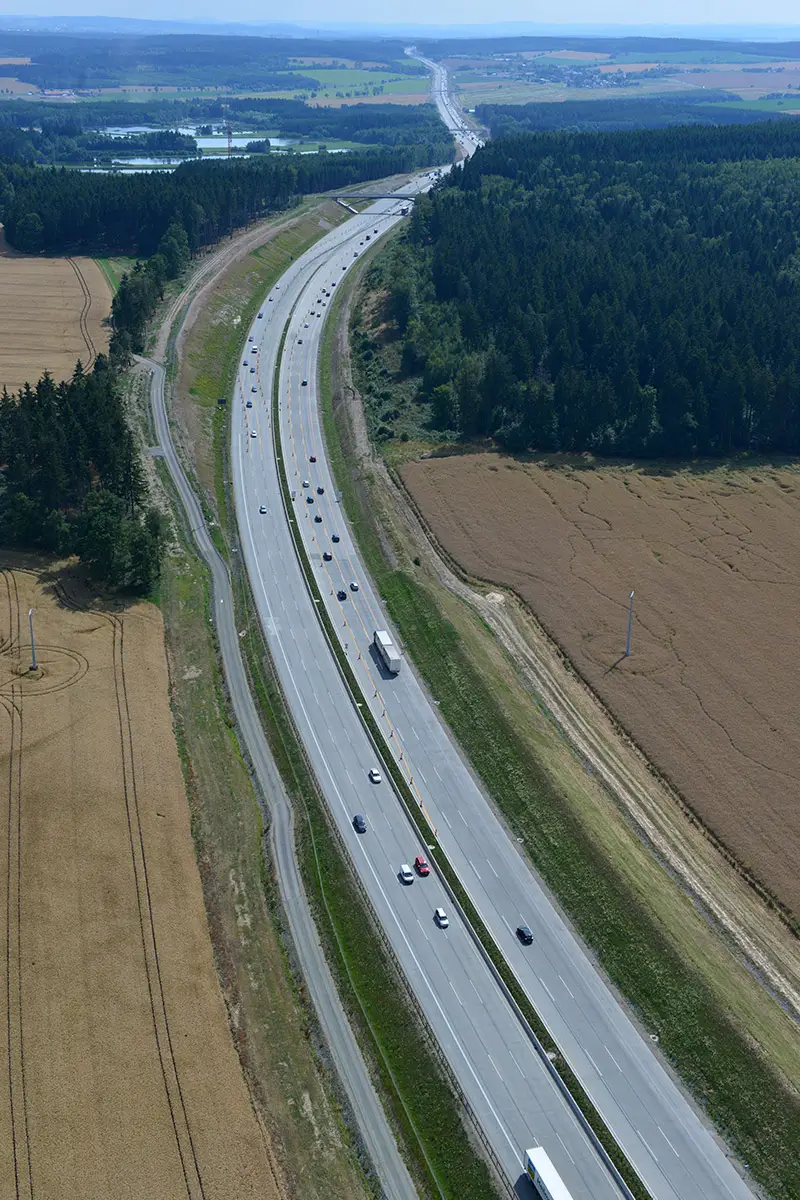
Protecting communities from noise and building for the long term on the A9 in Thuringia
- 2,700m of noise barriers and 296m of noise walls were constructed along the route, bringing emissions to permissible limits and significantly reducing noise impact on residents and the natural environment.
- The carriageway was built in concrete rather than asphalt, giving a calculated lifetime of 30 years - three times the 10-12 year lifespan of conventional asphalt - reducing resource consumption and maintenance requirements over the concession.
- Intelligent LED lighting is installed at motorway facilities, saving energy and reducing light pollution in the surrounding environment.
- Construction and maintenance waste is sorted and recycled or disposed of at specialist facilities in accordance with relevant regulations.